BACKgROUND
Completely redesigned the advance payment request feature to offer a smoother, frictionless experience. Built a new version that adapts to diverse user workflows, improves visibility of key information, and minimizes interruptions.
Aria is a B2B fintech that enables platforms and marketplaces to offer instant payments to their professional users.
The dashboard is an entry point to this service. It allows our clients, including operations teams, developers, and CFOs, to track transactions, view logs, manage loans and invoices, and test our API.
The feature allowing users to request an advance payment on an invoice was developed in the early stages of the product and had not received significant updates since. However, business needs have evolved, necessitating a thorough reassessment of this functionality to better align with current requirements.
A preliminary analysis revealed several friction points affecting operational efficiency and user experience. Key challenges identified included overly complex processes, a lack of clarity in the interface, and functional limitations that hindered adoption and optimal use. As part of this reassessment, new requirements were defined, such as the addition of a new billing document type, integration of new features, the inclusion of mandatory fields, and the addition of new elements, in response to the newly implemented functionalities designed to better meet user needs.
Discovery
To ensure that the redesign stayed aligned with real user needs, I led an in-depth research phase, combining qualitative and exploratory methods:
User interviews
I spoke directly with end users to understand how they interacted with the existing feature, uncover their pain points, and identify their expectations.
Collaboration with the Customer Success Team (CSM)
I partnered with our CSMs, who engage with users daily, to capture recurring issues and common feature requests.
Internal exploration
I also used the existing functionality myself in realistic conditions to identify its limitations and friction points.
Learning
This research phase revealed several key pain points that were negatively impacting both the user experience and the overall efficiency of the advance payment request feature:
Diverse user needs and workflows
Users had varying needs and workflows depending on their internal processes and business requirements. The existing feature did not accommodate these differences, forcing them into a rigid, one-size-fits-all approach that didn’t match their real use cases.
Lack of visibility at critical moments
Important information was not surfaced at the right time, leading to confusion and inefficiencies. Users often had to navigate away from the process or seek additional clarification, which slowed them down and increased frustration.
Restrictive and disruptive flow
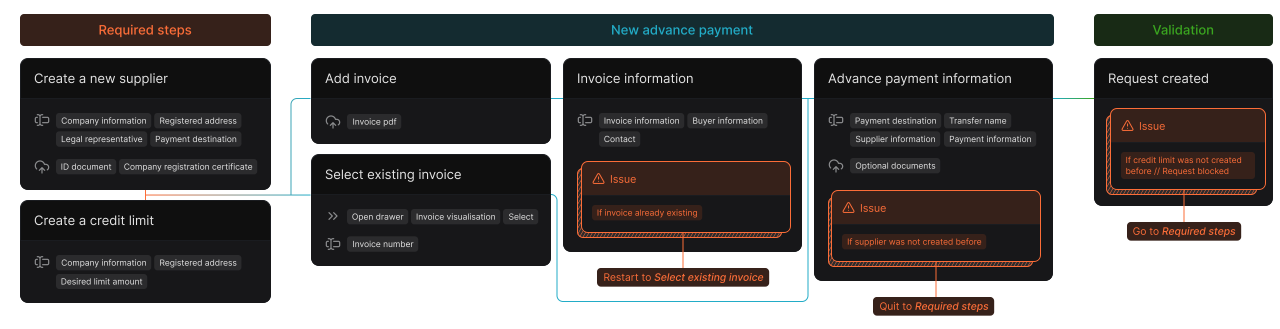
The feature required users to complete a series of mandatory actions before they could even start an advance payment request. If any prerequisite step was overlooked, users had to exit the process, complete the missing actions, and restart from the beginning, creating unnecessary friction.
These findings made it clear that I needed to design a more flexible, transparent, and user-friendly V2, that: adapts to different workflows, surfaces the right information at the right moment, and minimizes interruptions in the core journey.
Solution
Designing a smoother, more resilient flow
I explored multiple solution directions, balancing user needs with technical constraints to reach an outcome that was both effective and scalable. The final solution was designed to streamline the journey, reduce errors, and improve the efficiency of advance payment requests.
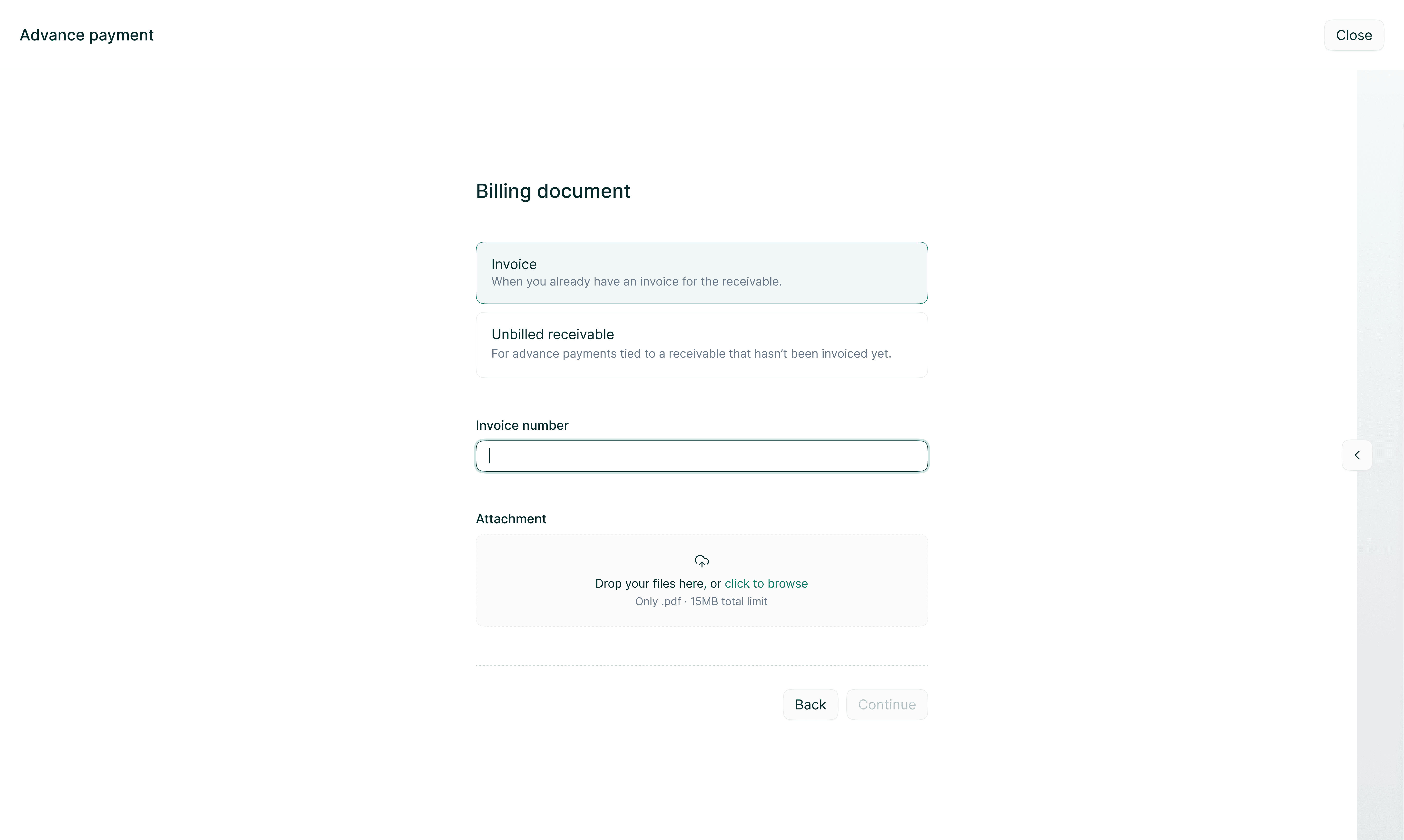
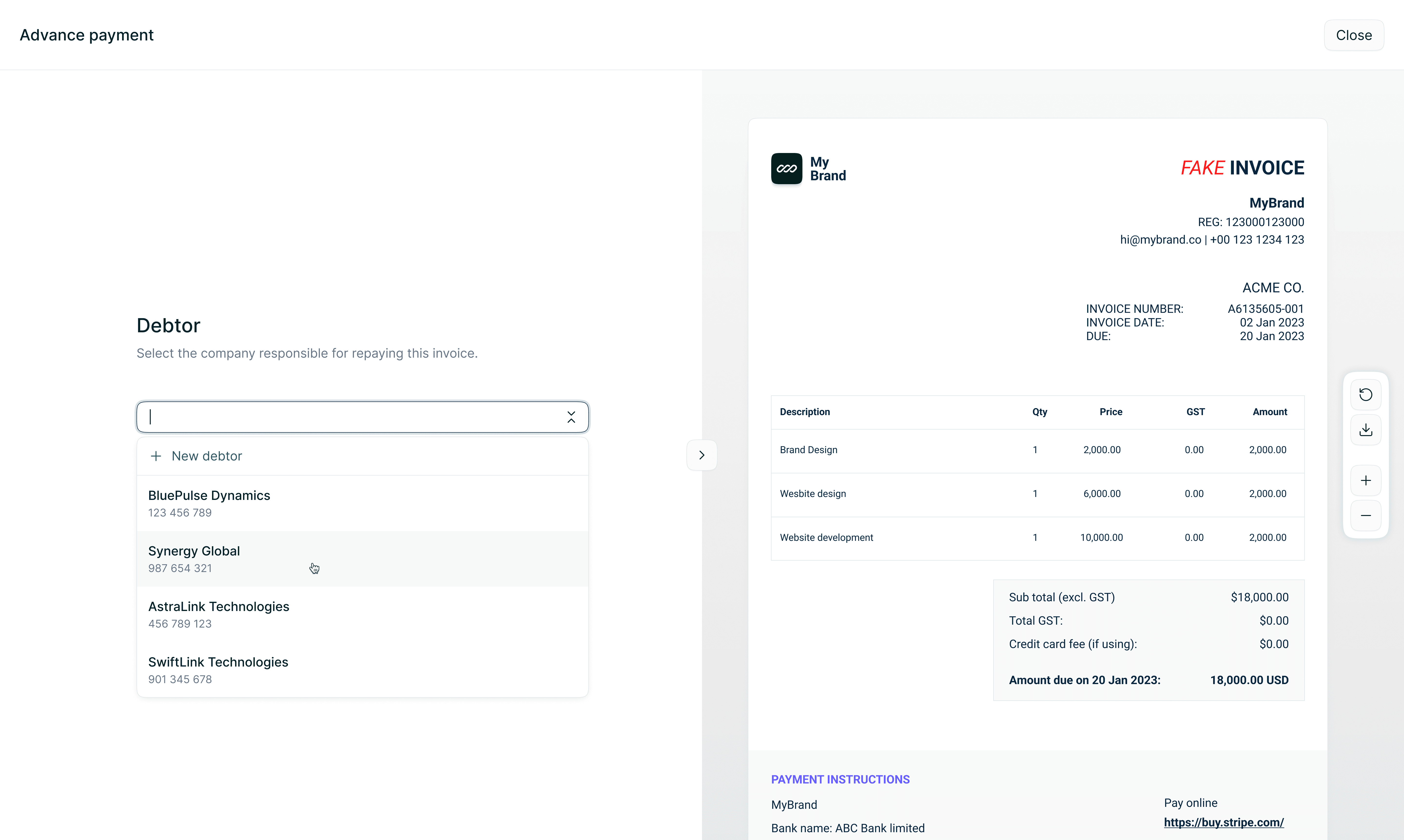
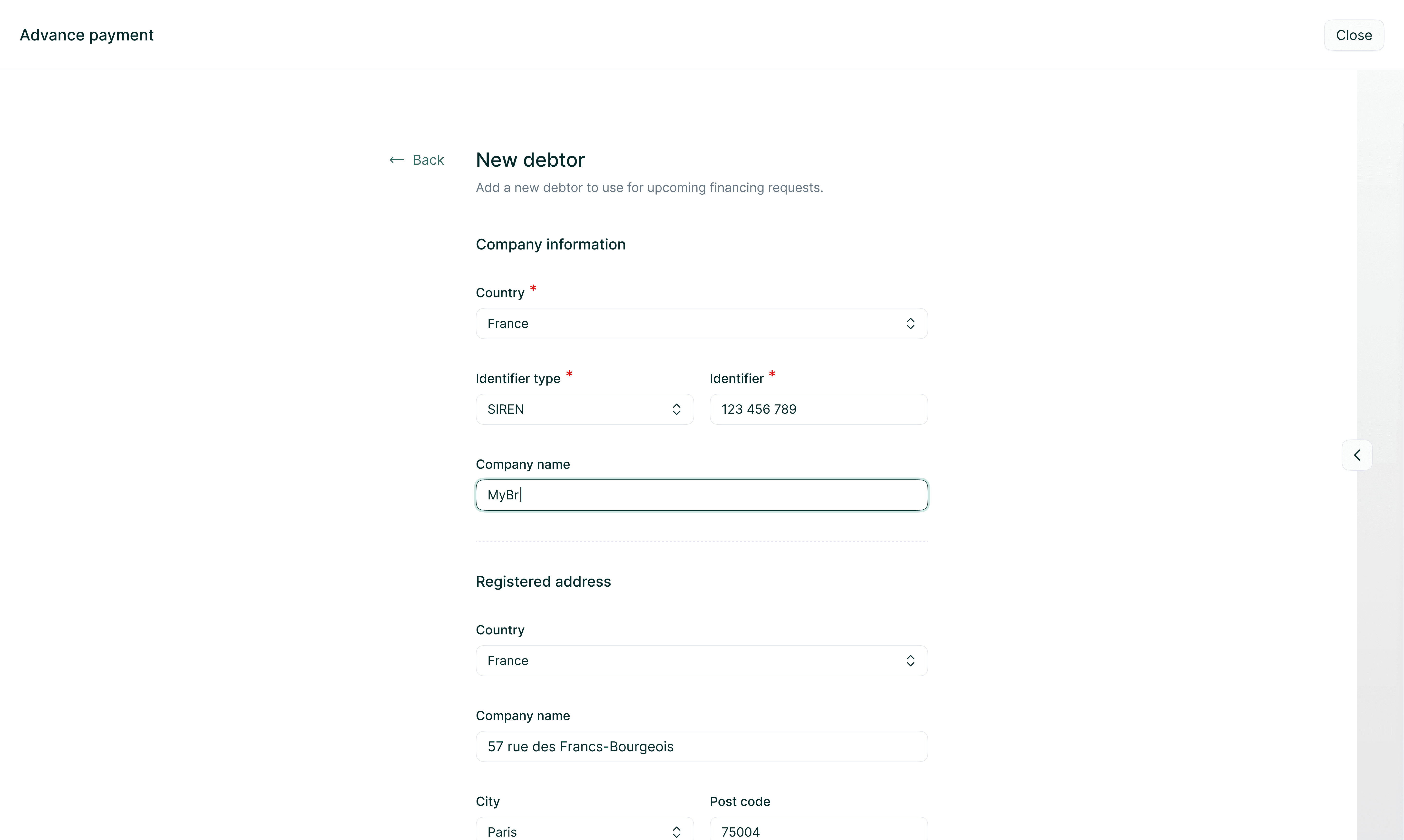
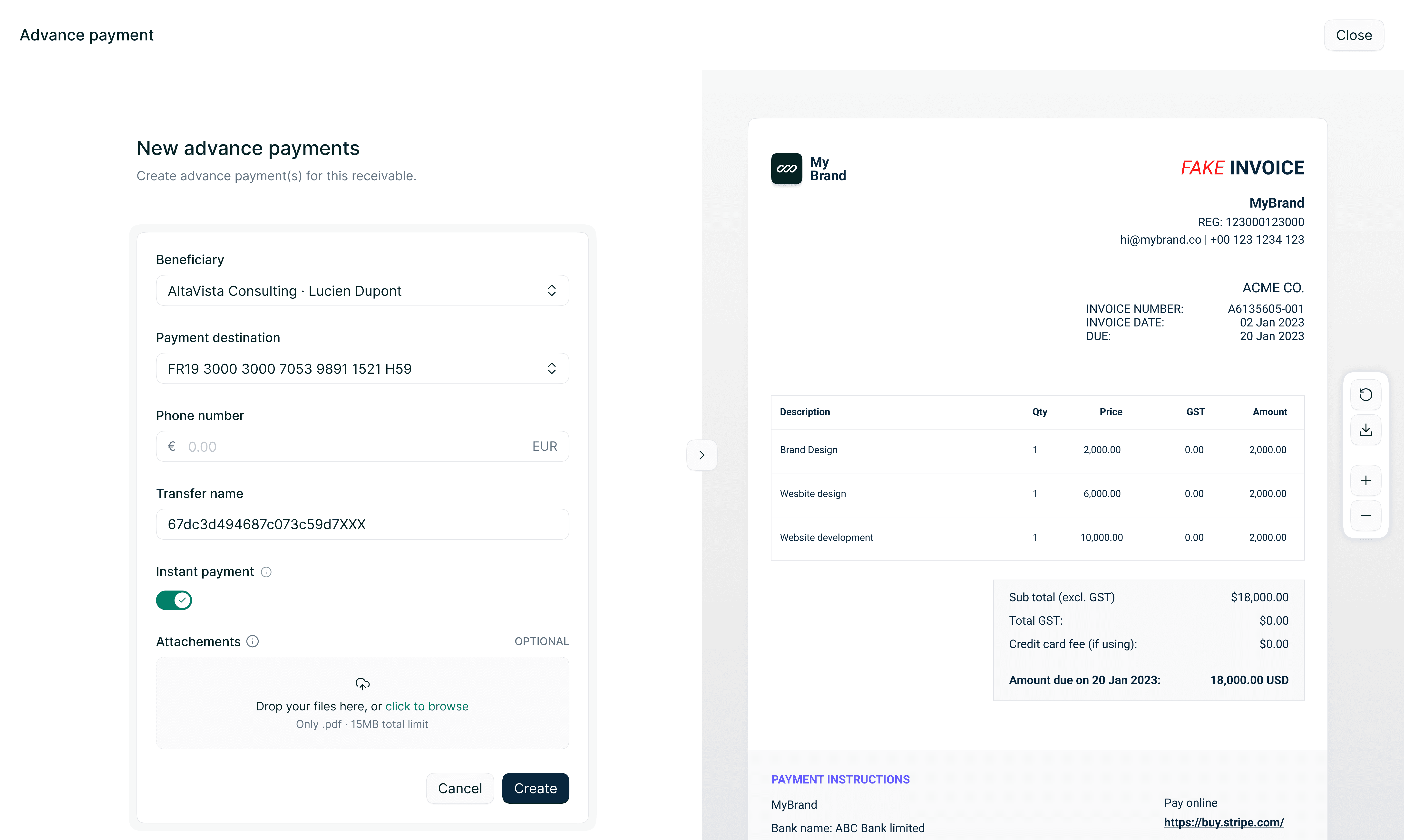
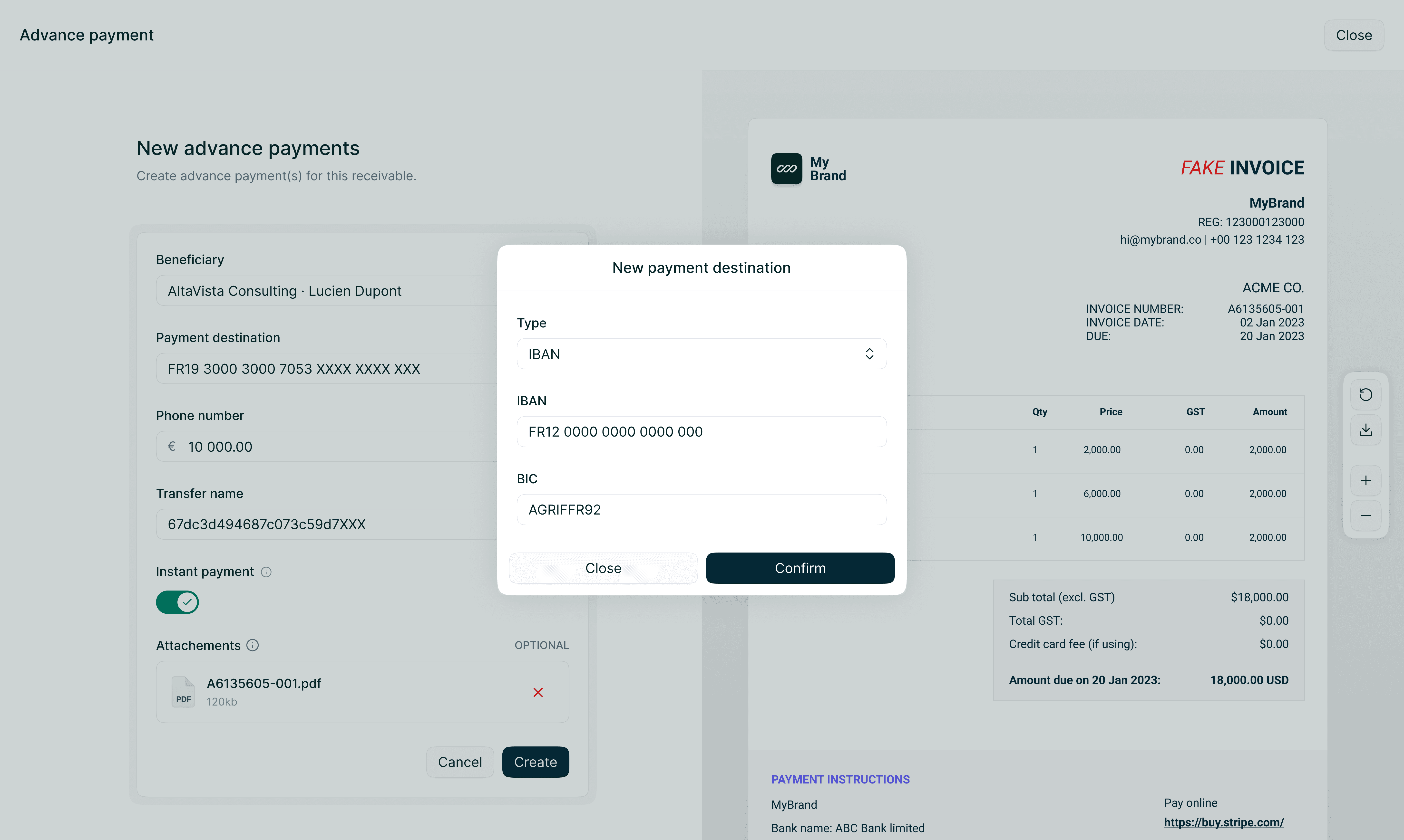
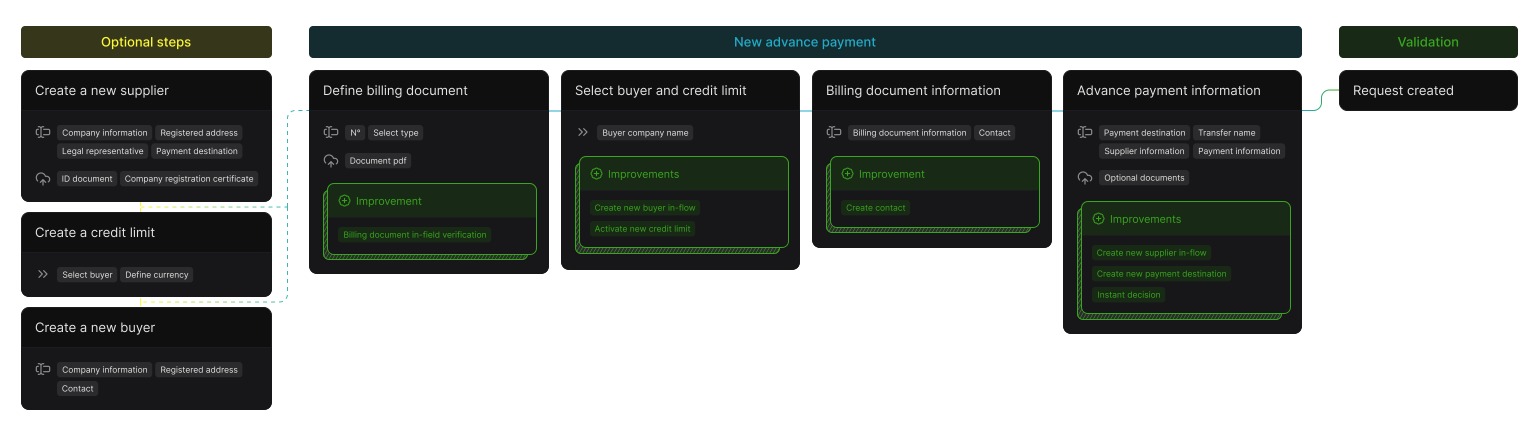
Integrating mandatory resource creation into the flow
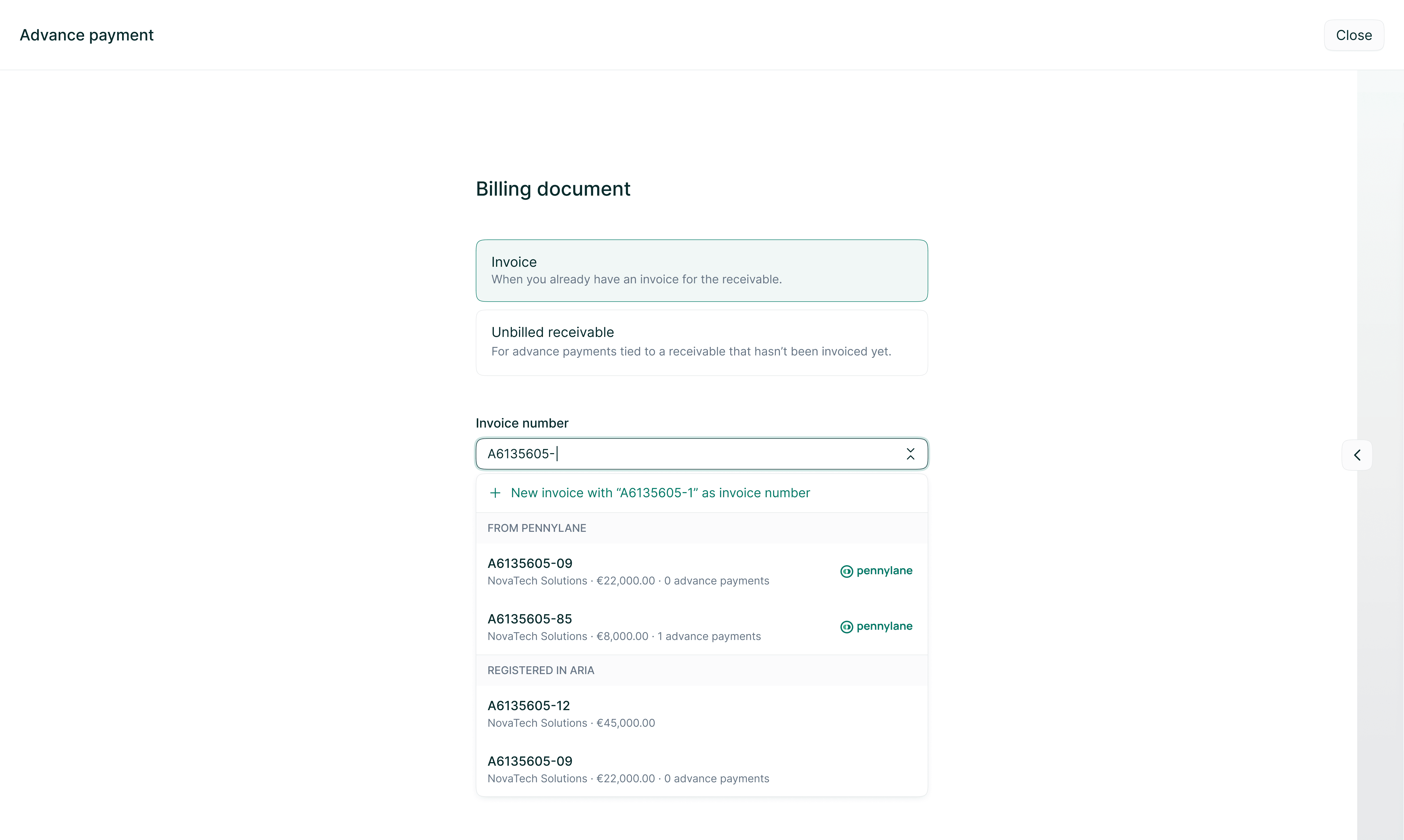
I integrated the creation of mandatory resources directly into the flow, so users no longer had to leave the process to create them elsewhere. This reduced context switching and helped them move forward without losing focus.
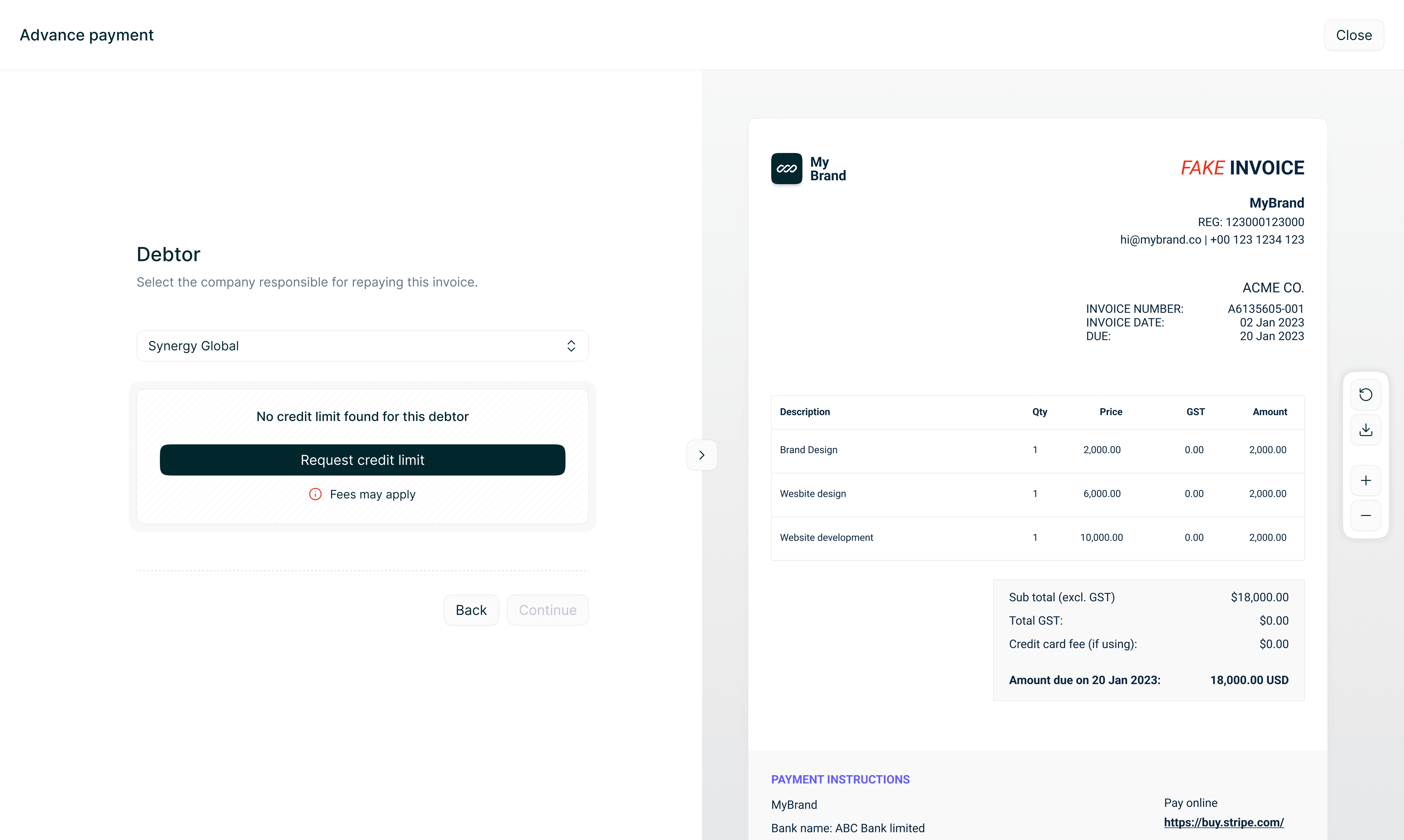
Adding early verification steps
To prevent mistakes and unnecessary actions, I added verification checkpoints at the beginning of the flow. This proactive step allows users to confirm key inputs early, before investing time in the rest of the process.
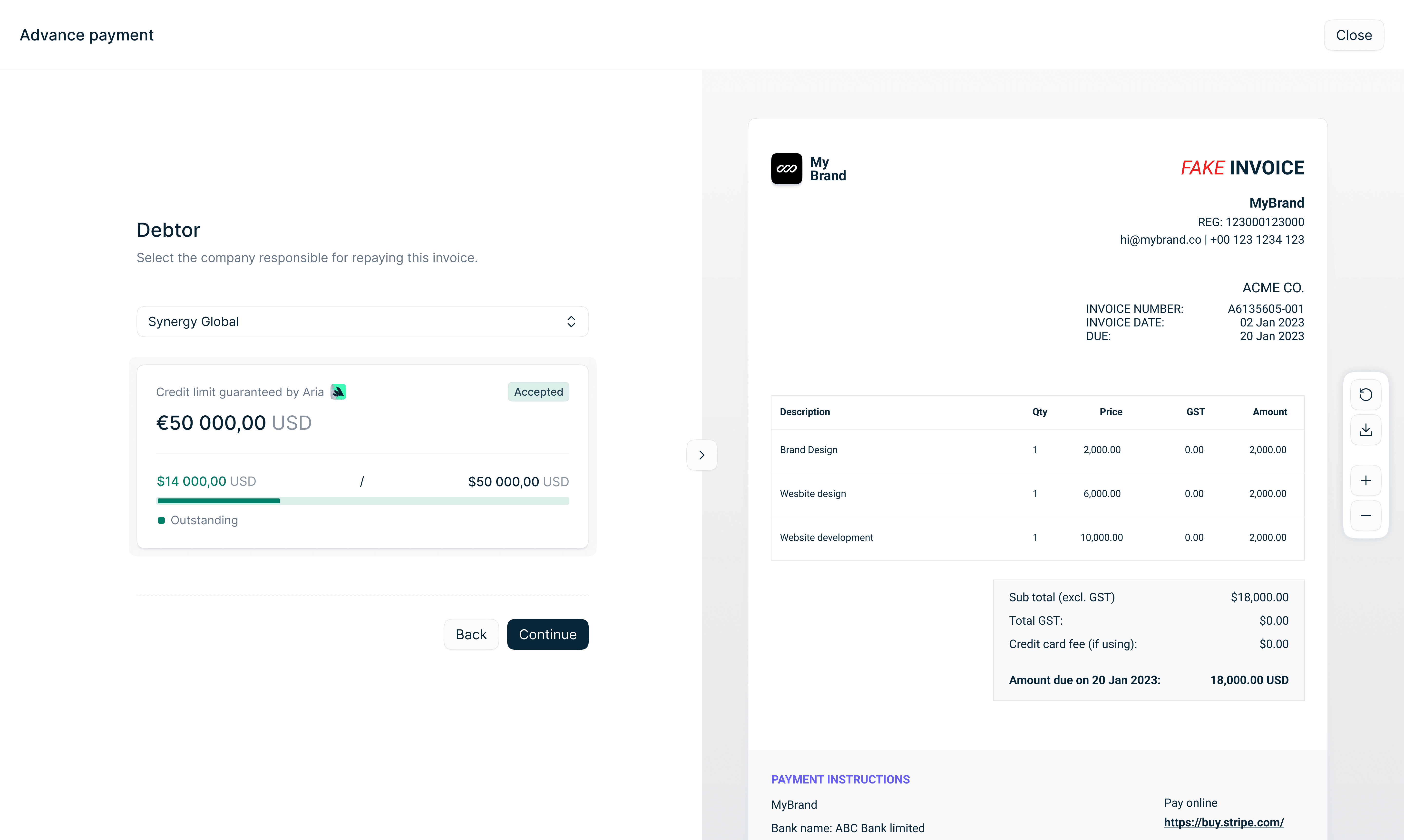
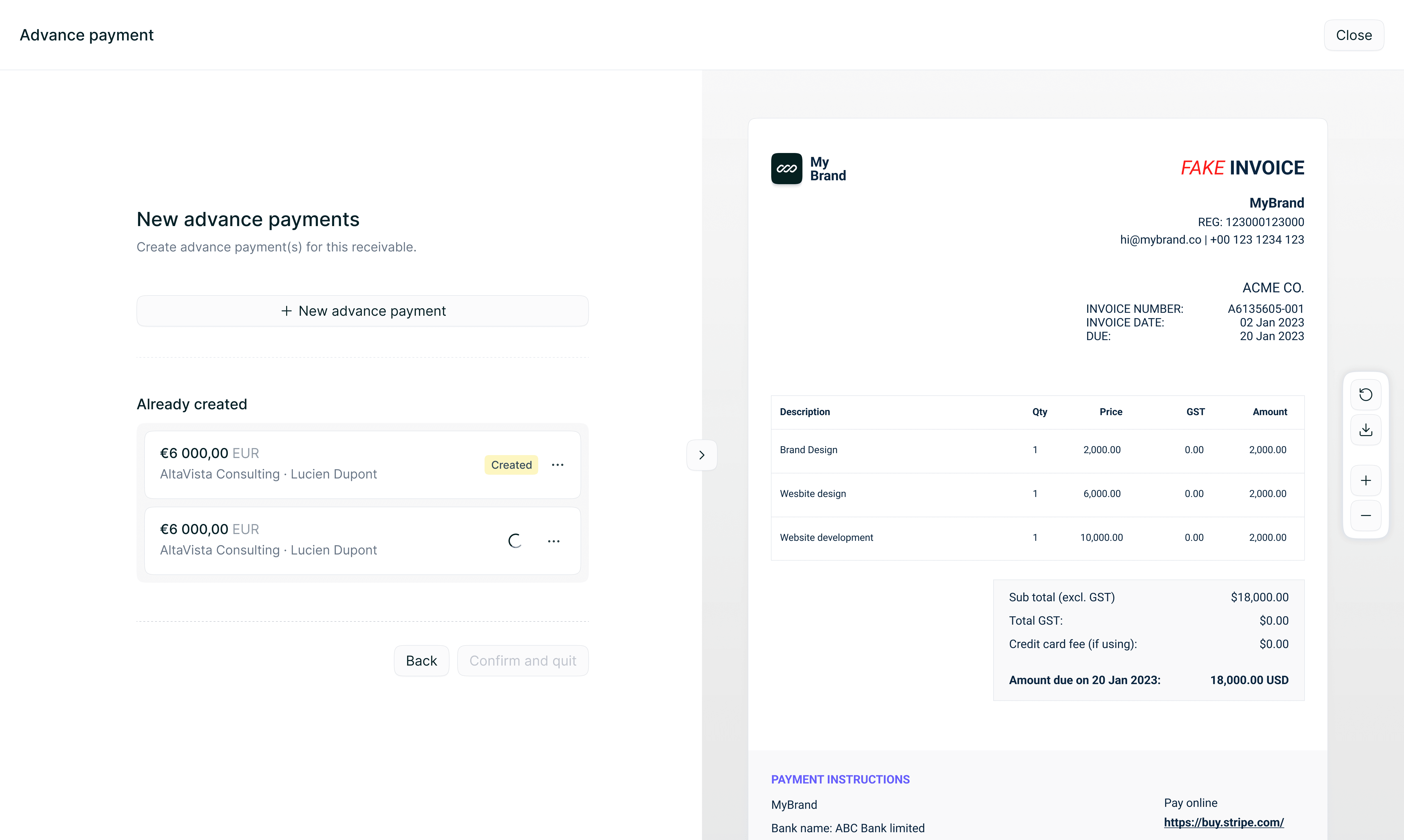
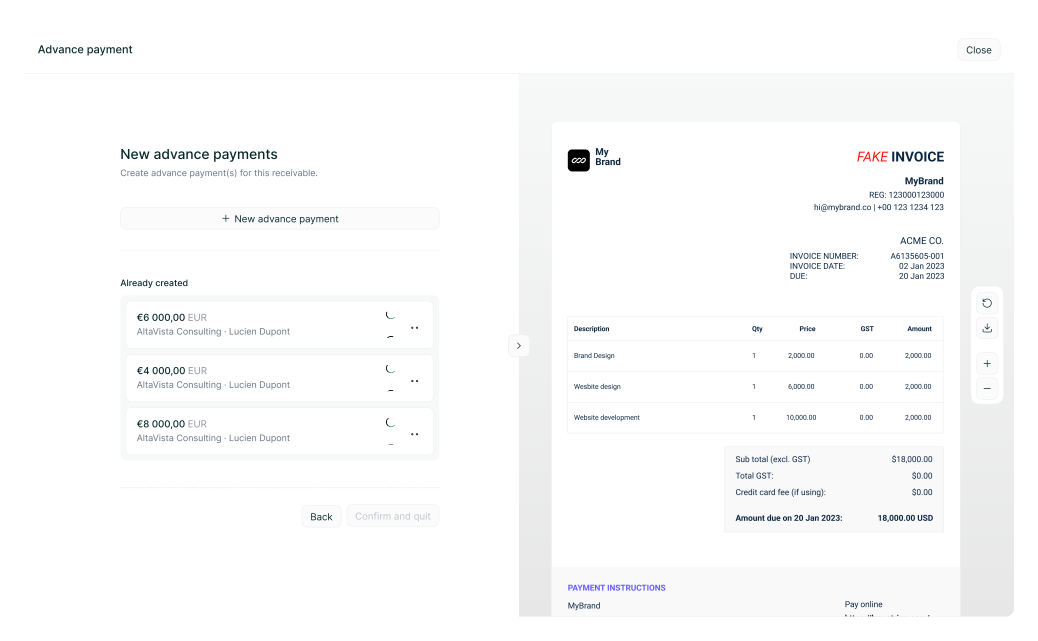
Improving resource information visibility
I enhanced the way critical resource information is displayed throughout the flow, so users can quickly understand the status and implications of each action.
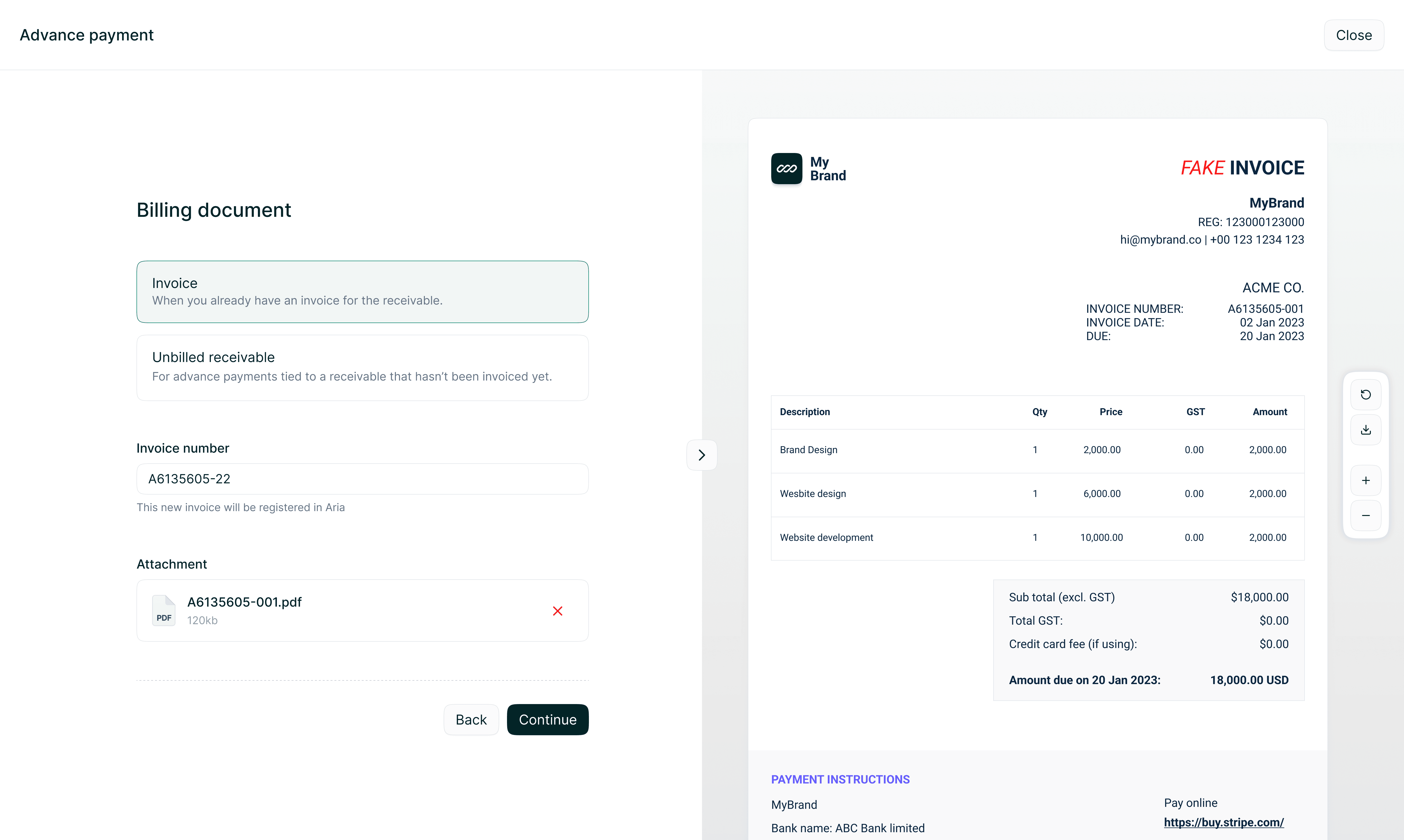
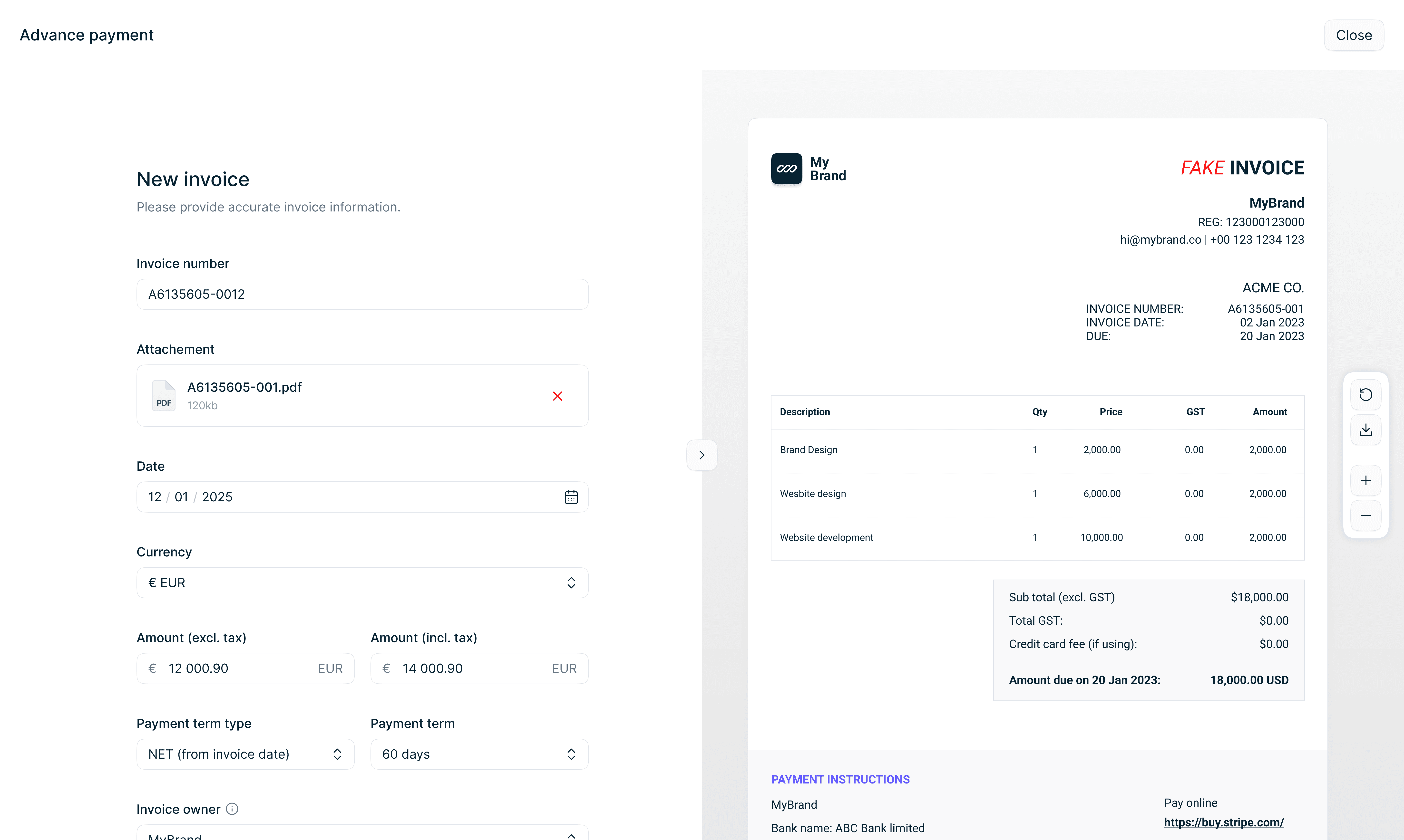
Keeping the invoice visible as a source of truth
I ensured the invoice (the main source of truth) remains visible throughout the journey. This persistent reference gives users constant access to the most up-to-date information about the request they’re processing, reducing ambiguity and the risk of errors.
IMPACTS
Reduction in bounce rate
The redesigned flow led to fewer users dropping off at key steps. Improved clarity and smoother navigation helped users complete their journey with more confidence and less friction.
Fast, frictionless adoption of the new experience
The new flow was quickly adopted without the need for onboarding, training, or documentation. This rapid uptake demonstrated the interface’s intuitive structure and alignment with user expectations.
Drop in support requests
Support tickets related to this area of the product decreased substantially, indicating clearer guidance, fewer usability issues, and an overall more self-sufficient user experience.
Stronger support for Sales and buyer reassurance
The improved flow became a powerful asset in product demos. It showcases clarity and reliability UX, making the product easier to sell and more reassuring for prospects during the evaluation phase.
Previously API-only features now accessible via the UI
Functionality that was once limited to API users is now available directly within the interface. This unlocks product value for non-technical users and reduces reliance on internal development resources for setup or configuration.